

The rise of smart hamster habitats
Pet tech used to be just for dogs and cats. Now, hamsters are getting automatic feeders and trackers too. I've seen more owners willing to spend on gadgets if it means their hamster is safer or more comfortable.
Traditional hamster cages, while functional, have always had limitations. Cleaning is a chore, monitoring temperature and humidity can be tricky, and it's hard to know what your hamster is actually doing when you're not around. 'Smart' cages aim to address these issues, offering features like automated cleaning, environmental control, and remote monitoring.
But the question remains: are these gadgets genuinely improving hamster lives, or are they just clever toys for us? I think it's a bit of both. There's real potential for these technologies to enhance a hamster's wellbeing, but it’s important to separate genuine benefits from unnecessary bells and whistles. A cage with a built-in camera is neat, but a consistent temperature control system feels far more important.
The concept of a 'smart' hamster habitat is still relatively new. We’re seeing early adopters and a lot of innovation, but also a fair amount of hype. It’s crucial to approach these products with a critical eye, focusing on features that truly contribute to a hamster's health, safety, and happiness.
Features that actually matter
So, what exactly should you look for in a smart hamster cage? The features vary widely, but some are more promising than others. Automated cleaning systems are a big talking point. The idea of a self-cleaning cage is appealing, but I have reservations. Many designs rely on sifting mechanisms that might not remove all waste, and the complexity introduces potential points of failure.
I care more about temperature and humidity control. Hamsters don't handle heat or cold well. A cage with a built-in thermostat is a massive help, though you have to check that it doesn't create one hot corner while the rest of the cage stays freezing.
Integrated cameras are another popular feature, allowing you to check on your hamster remotely. This can be reassuring, but consider the privacy implications (more on that later). Activity tracking, using sensors to monitor wheel running and general movement, can provide insights into your hamster's behavior and potentially detect early signs of illness.
Smart lighting systems, often controlled via an app, allow you to mimic a natural day/night cycle. This is a good idea, but a simple timer can achieve a similar effect at a lower cost. Data privacy is a serious consideration. What data is the cage collecting, where is it being stored, and who has access to it? Read the privacy policy carefully before purchasing.
- Automated cleaning systems that might miss spots or break down.
- Temperature & Humidity Control: Highly valuable for hamster health.
- Integrated Camera: Remote monitoring, but consider privacy.
- Activity Tracking: Insights into behavior, potential health monitoring.
- Smart Lighting: Mimics natural day/night cycle.
The best smart cages available now
The smart cage market is still developing, but several models stand out. The HabitHome 3000 (around $250, available on Amazon) is a popular choice, particularly for Syrian hamsters. It boasts a spacious interior (120cm x 60cm), integrated temperature control, and a built-in webcam. PetMD recommends it for its comprehensive feature set, but notes the cleaning system can be a bit noisy.
The EcoLife Smart Cage (approximately $180, PetSmart exclusive) takes a different approach, focusing on sustainability. It uses biodegradable bedding and incorporates a composting system to reduce waste. It also includes activity tracking and a basic temperature sensor. RachelGotHamsters.com praises its eco-friendly design, though it's best suited for dwarf hamsters due to its smaller size (80cm x 40cm).
For those seeking a more minimalist approach, the iHamster Pod ($150, direct from iHamster.com) offers a streamlined design with a focus on remote monitoring. It features a high-resolution camera, two-way audio, and a simple temperature display. It lacks automated cleaning or advanced environmental control, but it’s a solid option for owners who prioritize visual access.
The ZenDen Smart Habitat ($220, Chewy) is a modular cage that allows you to customize the layout and add smart features as needed. It comes with a basic temperature sensor and a webcam, and you can purchase add-ons like an automated feeder and lighting system separately. This flexibility is a major selling point.
The CritterCare Connect ($280, available at select pet stores) is the most expensive option on this list, but it offers the most comprehensive feature set. It includes automated cleaning, temperature and humidity control, activity tracking, a high-resolution camera, and even a built-in enrichment system that dispenses treats at random intervals. It's designed for both Syrian and dwarf hamsters, but its size can be intimidating.
The HamsterHub X ($190, Amazon) is a newer entry that’s gaining traction. It’s praised for its ease of use and intuitive app interface. It offers temperature monitoring, activity tracking, and remote camera access. While it doesn't have automated cleaning, the design makes manual cleaning reasonably straightforward.
- HabitHome 3000: Spacious, feature-rich, noisy cleaning system ($250)
- EcoLife Smart Cage: Eco-friendly, smaller size, ideal for dwarfs ($180)
- iHamster Pod: Minimalist, remote monitoring, lacks automation ($150)
- ZenDen Smart Habitat: Modular, customizable, add-ons available ($220)
- CritterCare Connect: Most comprehensive, expensive ($280)
- HamsterHub X: Easy to use, intuitive app, no auto-cleaning ($190)
Featured Products

Spacious 40-inch wooden design with chew-proof construction. · 270° panoramic view with bite-proof mesh and acrylic panels. · Dual top access doors for easy cleaning and interaction.
This cage offers a large, secure, and visually engaging environment with convenient access for pet parents.

2-layer acrylic habitat with full transparent viewing. · Includes 9 essential accessories for a complete setup. · Top-opening design for easy access.
This all-inclusive cage provides a clear view of your pet and comes with everything needed to get started.

Universal design suitable for a variety of small animals. · Tight wire spacing for enhanced safety. · Durable construction for indoor use.
A versatile and safe option with secure spacing, ideal for housing multiple types of small pets.

Designed for quick and easy cleaning. · Suitable for gerbils, hamsters, or mice. · Provides a comfortable habitat for small pets.
This cage prioritizes ease of maintenance, making it a practical choice for busy pet owners.
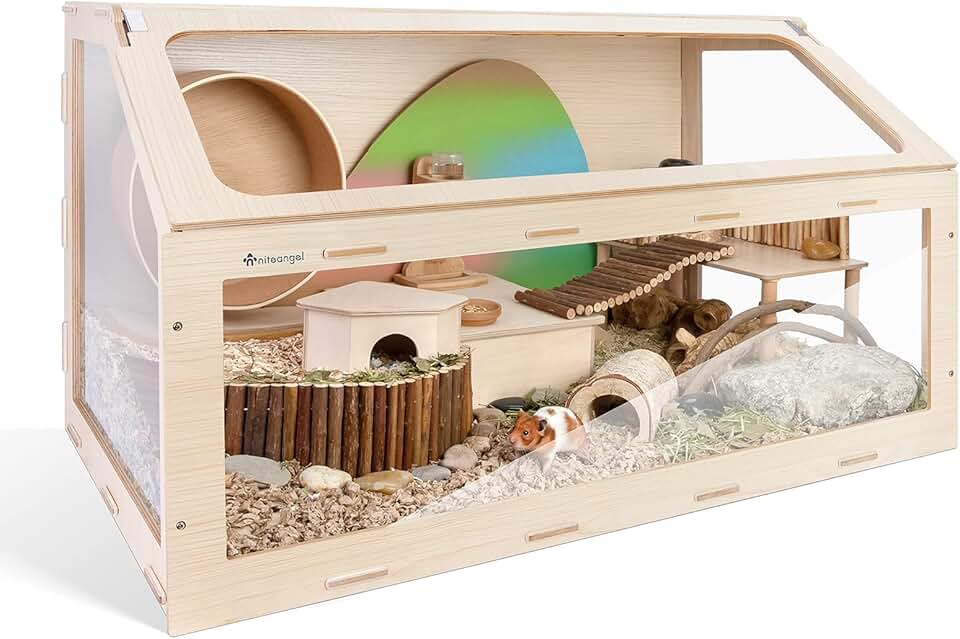
Large MDF Aspen cage with an oblique opening door. · Generous dimensions (47.1 x 22.7 x 26.9 inches) for ample space. · Suitable for Syrian and dwarf hamsters, degus, and mice.
Offers an expansive and aesthetically pleasing habitat with a unique door design for enhanced pet comfort.
As an Amazon Associate I earn from qualifying purchases. Prices may vary.
Upgrading your current cage
You don't necessarily need to buy a whole new cage to add smart features. Several DIY options can significantly enhance your hamster's habitat. One of the simplest is using a smart plug (around $20-$30) to control the lighting. You can set a timer to automatically turn the lights on and off, mimicking a natural day/night cycle.
For more ambitious DIYers, a Raspberry Pi or Arduino (starting around $35) can be used to create custom sensors. You can build a temperature and humidity sensor, an activity monitor, or even a system that automatically dispenses food or water. This requires some programming knowledge and electronics skills, but it's a cost-effective way to add sophisticated functionality.
Integrating a webcam for remote monitoring is also relatively easy. Many affordable webcams can be connected to your home network and accessed via a smartphone app. Just be sure to secure your network and protect your privacy. Remember, DIY projects require careful planning and execution to ensure the safety of your hamster.
Privacy and data security
Smart cages collect data – about your hamster’s activity, the temperature and humidity of its environment, and potentially even video footage. This raises legitimate privacy concerns. What data is being collected, who has access to it, and how is it being used? Always read the privacy policy carefully before purchasing a smart cage.
Look for cages that offer strong security features, such as encryption and two-factor authentication. Use a strong, unique password for your account and be wary of phishing attempts. Consider disabling any features you don't need, such as remote access or video recording. The potential for hacking exists, so keeping your home network secure is crucial.
Be mindful of the data being collected. Does the cage manufacturer share your data with third parties? Do they sell your data to advertisers? If you're uncomfortable with their data practices, consider choosing a different product. Protecting your hamster’s privacy – and your own – is paramount.
No comments yet. Be the first to share your thoughts!